
Get Personal Loans for Credit Score Under 600 with These Fast Approvals
Last updated: 2026-10-16
Navigating your finances when your FICO score falls under the 600 mark can feel like wandering through a dense, blinding mist. It is a heavy weight to carry on your shoulders. Most big-name banks tend to pull the ladder up behind them, leaving you high and dry.
This situation puts many people in a tight spot, searching desperately for a way to stay afloat. Life doesn’t wait for your credit to heal. Whether you are staring down an unexpected hospital invoice, a broken-down vehicle, or a sudden loss of work, the need for cash is immediate.
Major institutions, such as Wells Fargo or Chase, usually aren’t going to be your best friends here. Their digital gatekeepers are hardwired to hunt for stellar credit histories and high scores. They often miss the human story behind those digits, focusing strictly on the math.
Hunting for the perfect lender involves looking far beyond the annual percentage rate. You need to balance how fast you get the money against the total amount available. It is a delicate dance of checking if a company values your current paycheck over old mistakes.
A lender might decide to forgive a past bankruptcy or a missed payment if your current employment provides a steady, provable income. They look at the person you are today rather than who you were years ago. This distinction makes all the difference in the world.
Our current list focuses on the most realistic paths for individuals trying to mend their financial standing. We have scoured various providers to find out who actually steps up when the going gets tough. These are our leading picks for the year 2026.
- FastLendGo
- Avant
- Prosper
- Max Cash
- Upgrade
- LendingPoint
How We Vet Lenders for Lower Credit Scores
When we scan the market for providers catering to those with fair or poor credit, our focus shifts toward accessibility. We prioritize how quickly a borrower can access cash and the minimum amounts available to them. In a crisis, time is a luxury that most people simply do not have.
If you are staring down an eviction notice or a looming utility shut-off, waiting a week for a decision is not an option. You need a lender that utilizes rapid digital underwriting to get money moving. We prioritize those who can provide relief when the pressure is highest.
Our team also looks at the specific niches each company serves. Some lenders are built for quick, small-dollar emergencies, while others are better suited for massive debt restructuring projects. Determining if a lender wants to see a high salary or just a consistent work history is the key to finding an approval.
For instance, one provider might demand a monthly paycheck of at least $2,500 to qualify. Another might be perfectly happy with any verifiable income shown through your bank statements instead of traditional pay stubs. This small detail can be the difference between getting the funds you need and hitting a dead end.
| Provider | Funding Range | Credit Profile | Delivery Speed |
|---|---|---|---|
| FastLendGo | $500 – $5,000+ | Bad/Fair Credit | Fast Access |
| Avant | See site | Around 580 | See site |
| Prosper | $2,000 – $50,000 | See site | See site |
| Max Cash | $250 – $10,000+ | Bad Credit | In Minutes |
| Upgrade | Up to $50,000 | See site | See site |
| LendingPoint | $1,000 – $36,500 | See site | See site |
1. FastLendGo
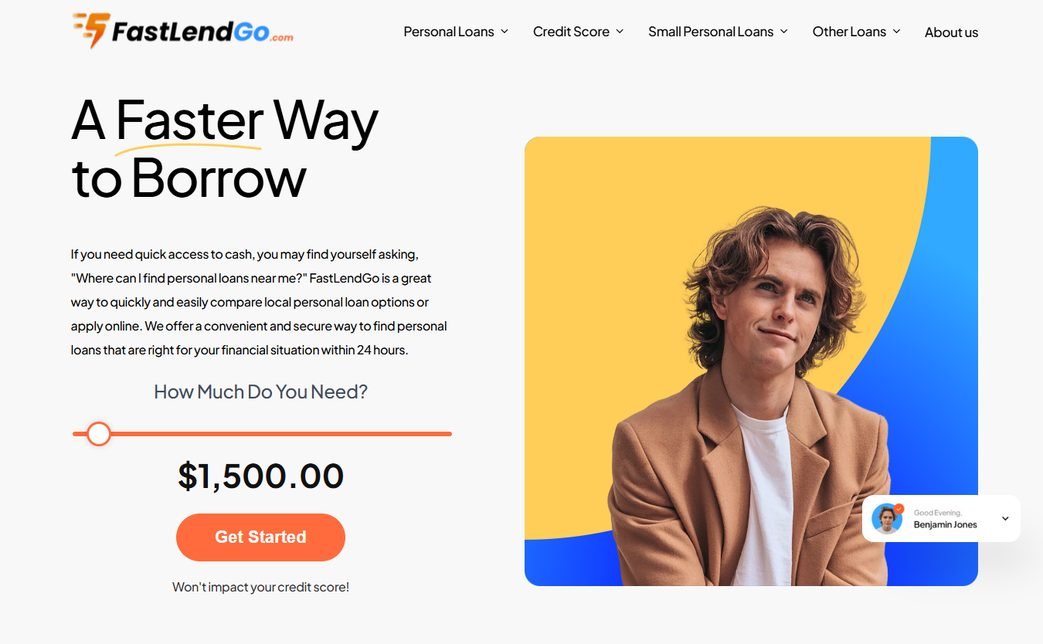
FastLendGo acts as a versatile lifeline for individuals navigating sudden financial hurdles. Their offerings span from modest $500 loans to larger sums exceeding $5,000. This variety is a lifesaver if you are facing an unexpected dental bill or a sudden car repair that cannot wait.
Because they cater to specific, urgent needs, their application process is often streamlined. They tend to look at the immediate necessity of your request rather than performing a deep-dive into your credit history from a decade ago. This makes fastlendgo.com a go-to for those in a pinch.
This lender is a strong contender for those with fair or bad credit who might feel ignored by big banks. They even offer specialized options like roof financing or motorcycle loans. By focusing on niche markets, they provide products that traditional institutions often won’t touch, such as using your property or vehicle as collateral.
Pros:
- Diverse loan purposes, including auto and emergency repairs.
- Low entry point with options starting at $500.
- Specifically targets the bad and fair credit demographic.
Cons:
- Specific interest rate details are not clearly listed.
2. Avant
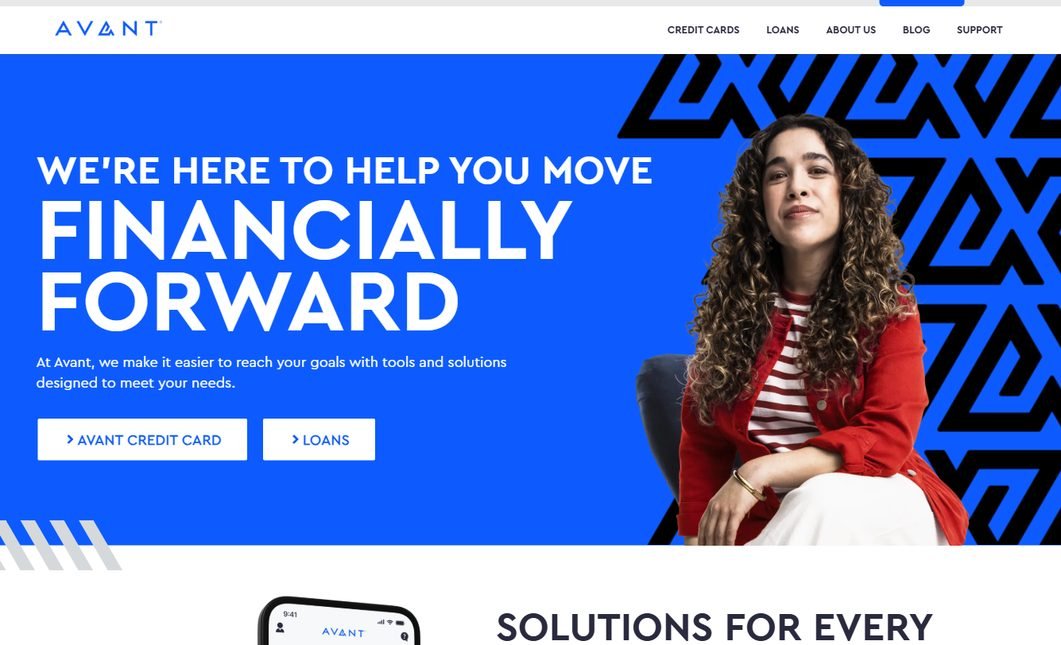
Avant operates under the idea that people deserve a path to financial progress, even when the road is bumpy. They provide a mix of credit cards and personal loans tailored for debt consolidation or handling those pesky unexpected costs. Their digital platform is designed to be a guide through the paperwork, removing the need to walk into a physical branch.
If your credit score is hovering around 580, you might find them to be a very viable option. Rather than judging you based on a single number, they focus on holistic solutions like installment loans to help stabilize your monthly budget. This approach prioritizes your capacity to pay back the debt over your past financial struggles.
They take a «whole person» view of your finances. This means your debt-to-income ratio might carry more weight than a single late payment from several years back. It is a proactive way to manage credit that looks at where you are going, not just where you have been.
Pros:
- Provides both credit cards and loan products.
- Great for home improvement and debt consolidation.
- Simple, digital-first interface for managing money.
Cons:
- Those with extremely low scores may still face rejection.
3. Prosper
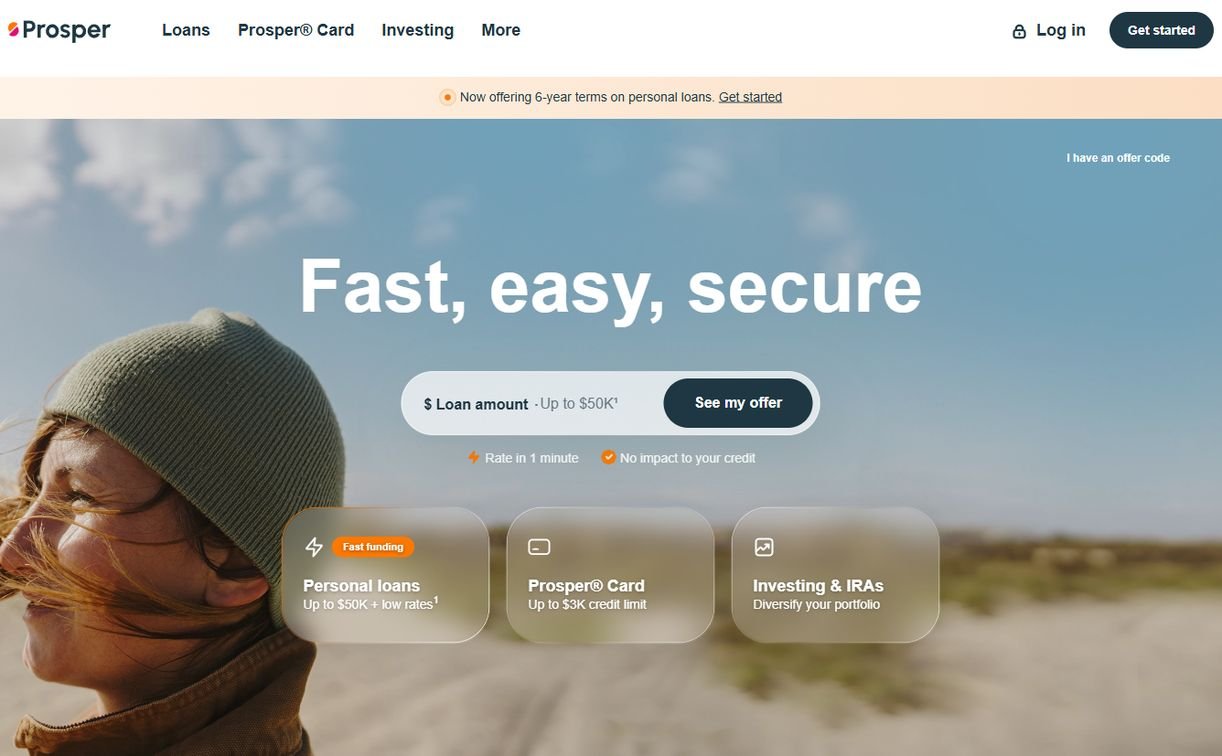
Prosper is a heavyweight in the peer-to-peer (P2P) lending world, offering a refreshingly different approach to borrowing. Instead of dealing with a massive institution, you are essentially borrowing from individual people looking to earn interest on their extra savings. It’s a marketplace of people helping people.
This model can offer a unique level of flexibility for borrowers with non-traditional backgrounds. Because these individual lenders are often seeking higher returns, they are sometimes more willing to accept a bit more risk. This can open doors that might otherwise stay shut at a traditional bank.
You can request significant amounts, ranging from $2,000 to as high as $50,000. This makes them an excellent choice for large life events, such as a wedding or major home renovations. Their transparent model has earned them a reputation for reliability among long-term users.
Pros:
- High upper limits reaching up to $50,000.
- The P2P model provides diverse lending options.
- Boasts positive feedback from various third-party review sites.
Cons:
- Approval times can vary because of the peer-based model.
4. Max Cash
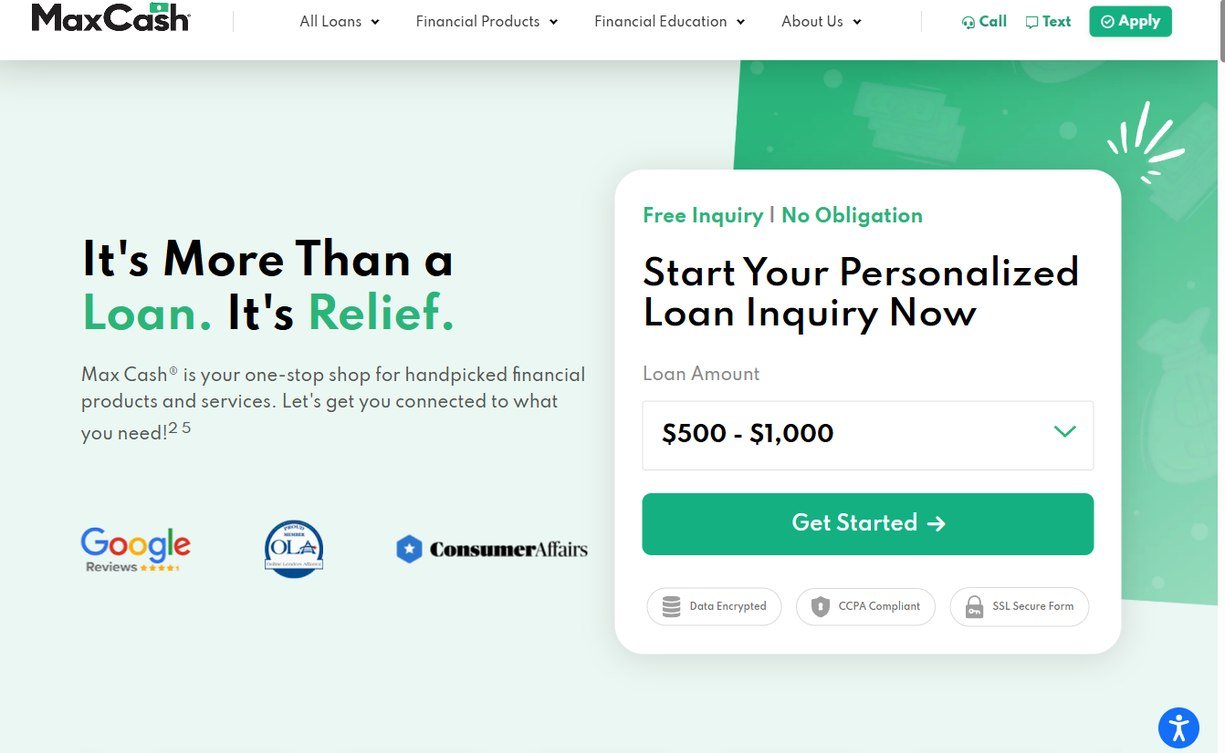
When a bill lands on your desk and the clock is ticking, Max Cash is ready to step into the ring. They have built their reputation on sheer speed, offering title loans and installment loans in just a matter of minutes. It is the «emergency room» of the lending world.
Imagine a sudden transmission failure or a medical deposit that must be paid immediately. In these moments, you don’t want to navigate a mountain of bureaucracy. Max Cash is designed precisely for these high-pressure scenarios where liquidity is the only thing that matters.
Their loan amounts are segmented very carefully, starting at a low $250. This prevents people from taking on more debt than they truly need. If you only need $300 to keep the lights on, Max Cash allows for that kind of surgical precision in your borrowing.
Pros:
- Incredibly fast processing for urgent financial needs.
- Low entry threshold starting at $250.
- Offers a variety of products, including title loans.
Cons:
- Small, rapid loans can come with very high interest rates.
5. Upgrade
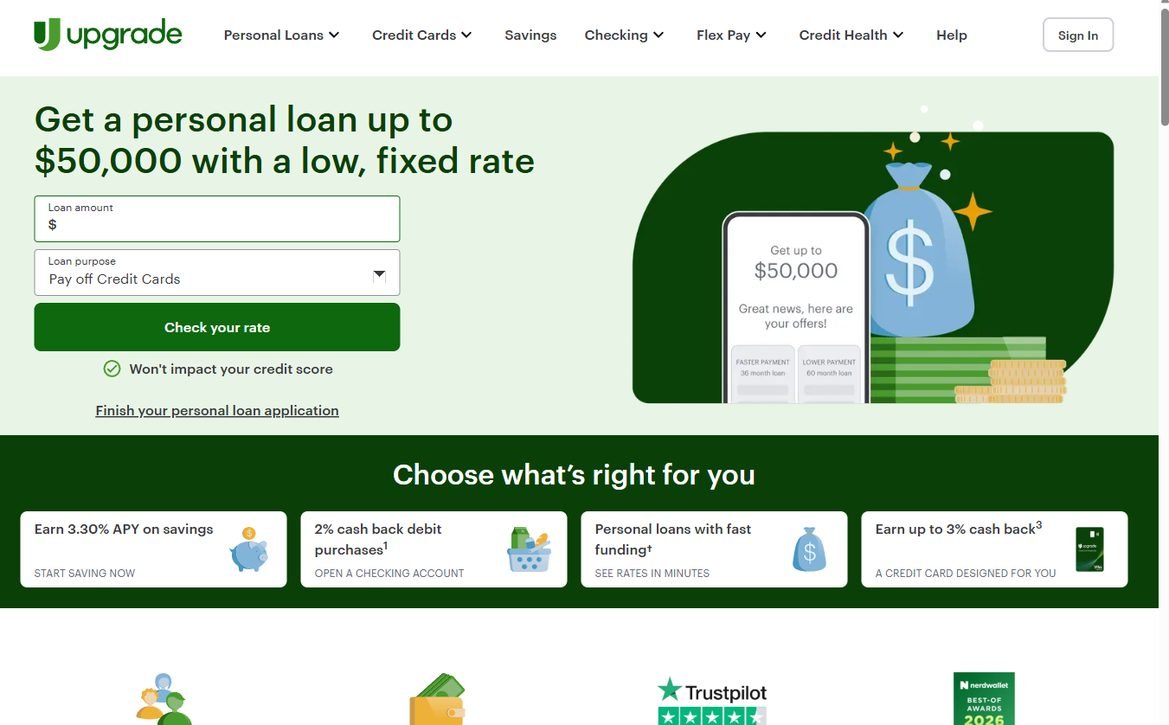
Upgrade is much more than just a simple lender; they are a comprehensive financial services provider. By offering personal loans, checking accounts, and credit cards, they act as a one-stop shop for your financial life. This can make managing your overall cash flow much more efficient.
With loan limits reaching $50,000, they are well-equipped to handle significant life transitions, such as starting a new business venture. Their system is built around the idea of helping customers earn rewards and maintain better control over their daily finances.
They typically use a blend of income verification and credit scores to decide on applications. This can be a major advantage for someone who has a high income but a lower credit score due to past mistakes. It is a holistic view of your current financial health.
Pros:
- A massive variety of products, including checking accounts.
- Generous loan limits going up to $50,000.
- Certain products offer the benefit of cash back.
Cons:
- May require a more stable financial history than niche lenders.
6. LendingPoint

LendingPoint aims to help users unlock new opportunities through highly personalized personal loans. Their loan amounts, which range from $1,000 to $36,500, make them a perfect middle-ground option. They serve those who need more than a quick cash advance but don’t require a massive bank loan.
They bridge the gap for consumers who are currently «unbankable» but are working toward a standard credit score. Their application process is designed to be incredibly efficient and, most importantly, user-friendly for those who are cautious with their credit.
A standout feature is their ability to let you check your rate without impacting your credit score. For someone with a sub-600 score, avoiding unnecessary hard inquiries is vital. This «soft pull» method allows you to shop for the best terms with absolutely zero risk.
Pros:
- Check your rates without hurting your credit score.
- Significant loan amounts up to $36,500.
- Clear usage options like travel or medical expenses.
Cons:
- They do not explicitly state if they are «low credit» friendly.
Navigating the Financial Toll of Low Credit Scores
When your score dips under the 600 mark, you are essentially paying a premium for the hazard you pose to a bank. It is not just a simple transaction for cash; rather, you are compensating the institution for the heightened probability of default. This is why grasping the Annual Percentage Rate (APR) is absolutely vital for your survival.
Think of it like this: a traditional bank might charge you an APR between 8% and 12%. However, for those with scores under 600, lenders often demand rates between 25% and 36%, or even higher if the product is short-term. This massive gap is often what separates a steady, manageable monthly budget from a downward spiral of debt that feels impossible to climb out of.
Let’s crunch some numbers to see the reality of the situation. Imagine you take out a $5,000 loan at a 10% interest rate for a three-year term. Now, compare that to taking out the same $5,000 at a 30% interest rate for those same three years. The disparity is staggering and can leave your wallet feeling incredibly light.
In that high-interest scenario, you might find yourself handing back nearly $8,000 just to settle a $5,000 debt. It’s a heavy pill to swallow. Before you put pen to paper on any contract, demand a «Truth in Lending» disclosure statement. This paperwork is a legal necessity that clarifies the exact total interest you will owe in actual dollars by the time the loan is paid off.
If the final number on that sheet makes your jaw drop, don’t just sign away your future. You might need to rethink your strategy. It might be wiser to request a smaller sum of cash or spend more time hunting for a more lenient lender to protect your long-term financial health.
How to Boost Your Approval Odds
You can’t wave a magic wand and watch a low credit score skyrocket overnight. However, you can certainly change your narrative when sitting across from a lender. Think of it as a first impression; they aren’t just looking at numbers, they are looking for reliability. They want to see that you are a steady bet rather than a gamble.
If your score is hovering around 550, your financial history can act as a powerful shield. Bringing six months of consecutive pay stubs to the table proves you have a steady stream of income. This evidence of employment consistency often carries more weight than a mediocre score because it signals you won’t skip out on payments. Stability is the name of the game.
Lenders are inherently cautious, often acting like cautious sailors watching a storm on the horizon. Their biggest fear is default, which is why demonstrating a predictable lifestyle is so vital. If you can prove your income isn’t a roller coaster, you become a much more attractive candidate for even the strictest banks.
Mastering the Art of the Pre-Qualification
Think of the pre-qualification stage as a reconnaissance mission before you head into battle. Whatever you do, do not jump straight into a formal application. Jumping the gun can lead to a «hard inquiry,» which is like a tiny dent in your credit score that can linger for a while. It’s better to be safe than sorry when your score is already on the edge.
On the other hand, «soft inquiries» are your best friend in this process. These happen when you use a comparison tool to check your potential rates. They are harmless and won’t budge your score downward. You should use these tools to shop around like a savvy consumer looking for a bargain at a department store.
The smartest way to handle this is to cast a wide net with those soft checks first. Once you have identified a lender that offers terms you actually like, only then should you pull the trigger on a formal application. This calculated strategy keeps your credit score protected while you hunt for the cheapest way to borrow cash.
Always keep your eyes peeled for the hidden traps buried in the fine print of your loan agreement. It is very easy to get seduced by a tiny monthly payment that seems incredibly easy on the wallet. However, if that loan is stretched over a massive timeframe, you might find yourself paying back twice or even triple the original amount you borrowed.
Your goal should be to find the shortest repayment window that your budget can actually handle. Shorter terms mean you aren’t bleeding money into interest rates for years on end. It’s about being aggressive with your debt rather than letting it haunt your bank account for a decade.
If you find yourself with a little extra breathing room, try to throw an additional $50 toward your principal every single month. It might seem like a small drop in the ocean, but that extra payment works wonders. It can significantly slash the total interest you owe and help you escape the cycle of debt much faster than you expected.

Top rated
-
 Cell phones
$250.00
-
sheath cell phone Samsung A20/ A30/ A50
$8.16
-
sheath cell phone Samsung A20s
$1.00
-
Samsung Bluetooth Headphones
$1.00
-
Xiaomi headphones
$10.00
Products
-
Cell phones
$250.00
-
Anker PowerCore portable charger
$39.99 – $55.99
-
Xiaomi headphones
$10.00
-
sheath cell phone Samsung A20/ A30/ A50
$8.16

